Wolf Winner Games and Providers Australia 2026
 Available in AU
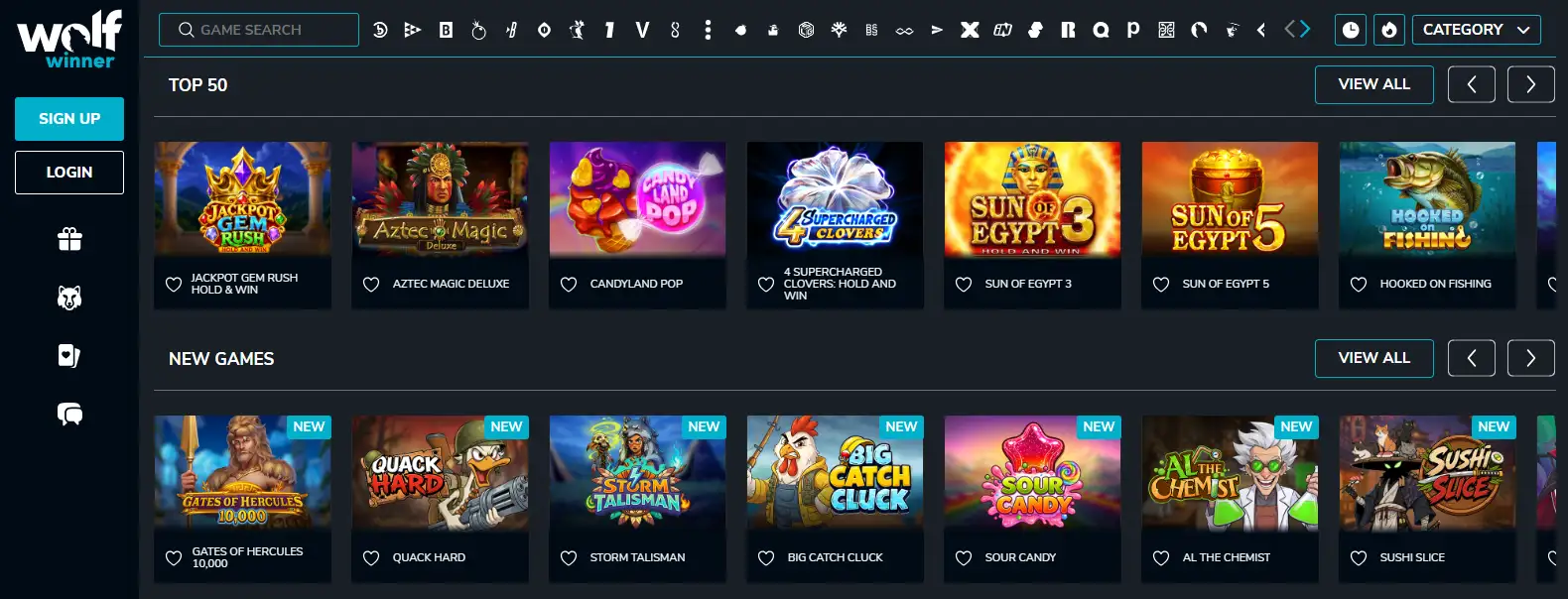
Wolf Winner’s listed catalogue spans slots, jackpot games, roulette, blackjack, baccarat, video poker, bingo, keno, scratch cards, crash games, dice and other card formats, with live games also present. Twenty providers are listed for the casino. That breadth is more useful when it is organised by play style rather than treated as one undifferentiated lobby: reel games, table formats, live-dealer products and faster alternative formats create different session rhythms and decision demands.
Table of Contents
- The catalogue spans reel, table, live and alternative formats
- Twenty providers are listed across the Wolf Winner catalogue
- Live casino is a separate way to experience the table catalogue
- Game variety matters most when it matches the session you intend to play
- Questions about Wolf Winner games
- Wolf Winner’s game range is broad enough to compare by format instead of by lobby size alone
The catalogue spans reel, table, live and alternative formats
The listed game categories give Wolf Winner a broad product shape. Slots and jackpot games cover reel-based play, while roulette, blackjack, baccarat and video poker sit closer to conventional table or card formats. Bingo, keno, scratch cards and other card games extend the catalogue beyond the most common casino categories, and crash and dice games add faster formats with different pacing.
Organising those categories by how they play is more practical than counting menu labels. A slot session is mainly repeated wager cycles with outcomes resolved automatically. Blackjack and video poker add recurring player decisions. Roulette and baccarat have a different decision structure again, while crash formats often compress a round into a shorter time window. The category list therefore signals variety in interaction, not just variety in artwork.
That difference in interaction affects how a session feels. Reel games can make it easy to move quickly from one round to the next, while table games may encourage more time spent considering a wager or a decision. Bingo, keno and scratch-card formats introduce another rhythm again. Looking at the catalogue through those behavioural differences gives the category list a practical use beyond simply showing that many labels exist.
A mixed lobby can also make switching frictionless. Moving between a slow table format and a faster game can change the pace of spending even when the same budget is being used. Keeping one session budget across categories is more consistent than treating every switch as a fresh start.
- Reel and jackpot formats: slots and jackpot games.
- Table and card formats: roulette, blackjack, baccarat, video poker and other card games.
- Number and instant-style formats: bingo, keno and scratch cards.
- Faster alternative formats: crash games, craps and dice.
- Live formats: live games are part of the catalogue and have a separate live-casino guide.
That split helps set expectations before opening a game. Faster round cycles can increase the number of wagers made in a fixed period, while decision-heavy table games can slow the pace but add more choices per round. Neither structure changes the underlying gambling risk: repeated play can produce losses, and no game format guarantees a favourable outcome.
Twenty providers are listed across the Wolf Winner catalogue
Wolf Winner’s provider roster contains 20 names: Pragmatic Play, Yggdrasil Gaming, Realtime Gaming, Betsoft Gaming, Playson, BGaming, Booming Games, Booongo (BNG), 1spin4win, Penguin King, Shady Lady, VoltEnt, Flatdog, Reevo, Platipus, Qora Games, Swintt, Mascot Gaming, G Games and Spribe. A roster of that size can broaden the mix of visual styles, mechanics and game families because the catalogue is not dependent on a single studio.
| Provider group | Listed providers | Practical catalogue effect |
|---|---|---|
| 1–5 | Pragmatic Play; Yggdrasil Gaming; Realtime Gaming; Betsoft Gaming; Playson | Multiple studios contribute to the core catalogue rather than one supplier dominating the list. |
| 6–10 | BGaming; Booming Games; Booongo (BNG); 1spin4win; Penguin King | The middle of the roster adds further game families and presentation styles. |
| 11–15 | Shady Lady; VoltEnt; Flatdog; Reevo; Platipus | Additional studios widen the catalogue across less familiar labels as well as larger names. |
| 16–20 | Qora Games; Swintt; Mascot Gaming; G Games; Spribe | The final group includes more specialist and alternative-format coverage. |
The 20-provider roster describes Wolf Winner’s catalogue as a whole. A specific table or live game should be attributed to a studio only when that game identifies the provider; the roster alone does not establish provider-by-provider ownership of every category.
For browsing, the roster is most useful as an index. If a player recognises a studio name, a provider filter can narrow a large lobby without making assumptions about which titles belong to other studios. If no provider filter is available, the same principle still applies: identify the game first, then read the title-level information instead of inferring rules from the provider list alone.
Provider count and game count describe different things. A single studio can supply many titles, and individual games can change while the provider roster remains the same. The 20-name figure therefore describes supported providers rather than the number of individual games.
For catalogue navigation, studio filters can still be useful when a lobby offers them. They reduce a large game list into a smaller set without implying that one provider is inherently safer or more favourable than another. The relevant game-level information remains the rules, stake range and published return information shown for the individual title where available.
Live casino is a separate way to experience the table catalogue
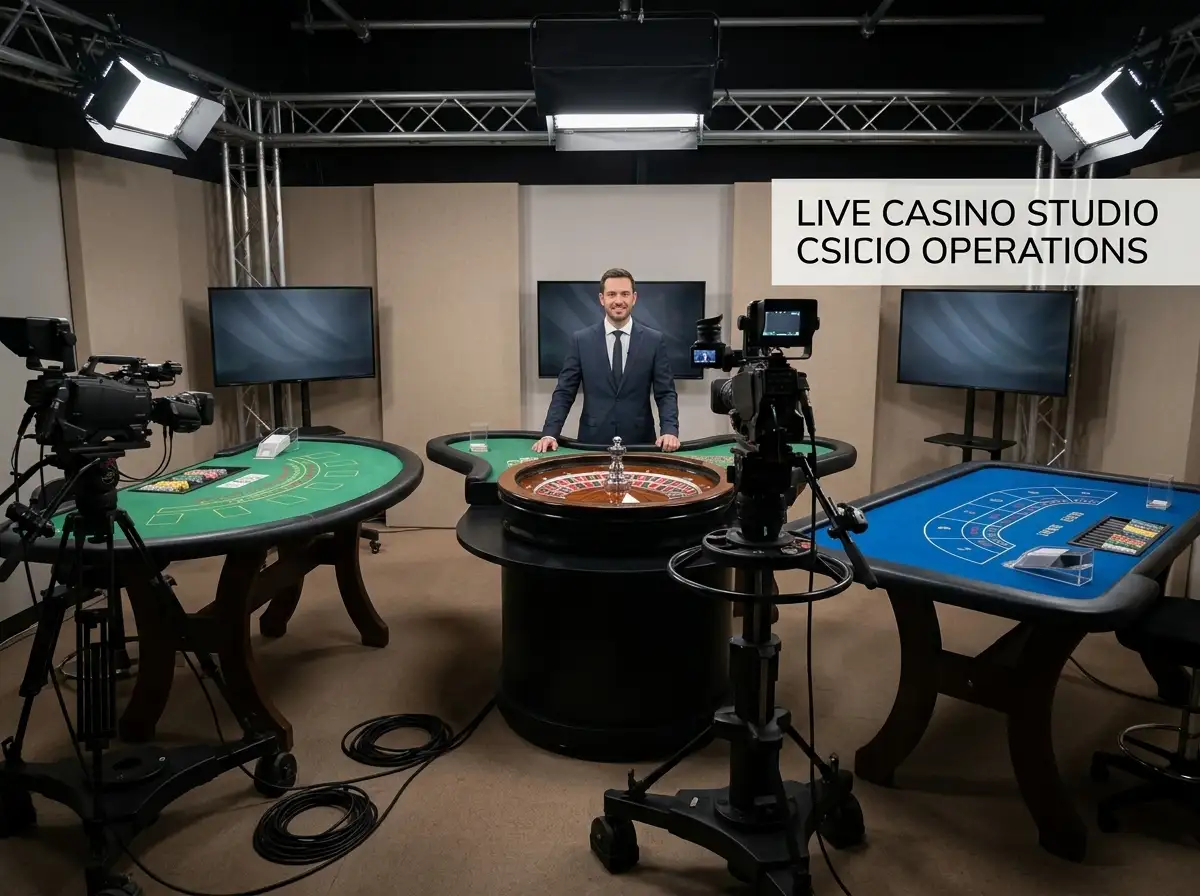
Live games are listed as part of Wolf Winner’s product mix. The defining difference is presentation: a live-dealer format streams a staffed table or studio instead of resolving the entire game through a software-only interface. That changes the pace and social feel of the session even when the underlying game family is familiar.
The detailed live-format list belongs in the dedicated Wolf Winner live casino guide. At the parent level, the important point is that live play sits alongside the wider slots and table catalogue rather than replacing it. A reader comparing the lobby can therefore choose between software-led games and live presentation while keeping the underlying rules of each game family in view.
- Choose the game family first: reel, table, live or alternative format.
- Open the individual game’s rules or information panel before staking.
- Check the minimum and maximum stake shown for that title.
- For live tables, pay attention to table pace and whether seats or decision windows affect the session.
- Set a spending limit before play rather than using the pace of the game to determine session length.
A live studio can feel slower because a dealer handles physical or streamed actions, but some tables still run continuously and can support many betting decisions over a session. Pace should therefore be judged from the actual table rather than from the “live” label alone.
Live presentation can also make session time feel different because there is a visible dealer, table sequence and waiting period between outcomes. That can make a session seem more structured, but it does not remove the need to track total spend. The relevant controls are still the stake shown at the table, the rules of the game and the budget set before play.
Game variety matters most when it matches the session you intend to play
A large category list can make browsing easier for someone who switches between slots, tables and faster formats, but variety is not a quality score by itself. The useful question is whether the catalogue contains the type of game, pace and decision structure a player is looking for without encouraging unnecessary switching between formats.
Session planning is especially relevant when the lobby mixes short-cycle games with slower table play. Moving from a blackjack table to a crash game, for example, can increase the frequency of wager decisions even if the stake itself is unchanged. Tracking total spend across the whole session gives a more consistent risk measure than treating each game family as a separate budget.
The same principle applies when moving between providers. A visual redesign or a different studio name can make a new title feel like a separate activity, but the money still comes from the same session balance. A catalogue with many providers is therefore easiest to manage when provider choice is treated as navigation rather than as a reset of spending limits.
Game-level information remains the final reference for how a title works. The provider roster and category labels can guide browsing, while the individual rules panel explains the actual game mechanics. Where a title publishes return information or other mathematical details, those belong to that title rather than to the Wolf Winner catalogue as a whole.
The payments guide covers how the hybrid cashier is structured, while the games catalogue is best read as a product map. Payment choice does not change the mathematical outcome of a game, and provider count does not create a guarantee about results. Use the game rules, displayed stake controls and personal session limits together.
Gambling outcomes are uncertain. A broader lobby creates more choice, not a way to remove the possibility of financial loss.
Questions about Wolf Winner games
How many game providers are listed for Wolf Winner?
Twenty providers are listed.
Does Wolf Winner list live games?
Yes. Live games are included in the listed catalogue.
Which broad game families are listed?
The catalogue includes slots, jackpots, roulette, blackjack, baccarat, video poker, bingo, keno, scratch cards, crash games, dice, other card formats and live games.
Are specific live tables assigned to particular providers here?
No. The provider roster is site-wide, so individual live tables are not assigned to a studio unless that pairing is shown at game level.
Wolf Winner’s game range is broad enough to compare by format instead of by lobby size alone
The useful signal is the mix: a 20-provider roster supports reel games, conventional tables, live play and faster alternative formats within one catalogue. That breadth gives several ways to structure a session, but it also makes pace and spending discipline more important when moving between game families. Treat the catalogue as a map of formats, then check the individual game’s rules and stake controls before playing.
Read next
Written by the editors at Wolf-winner1.org.