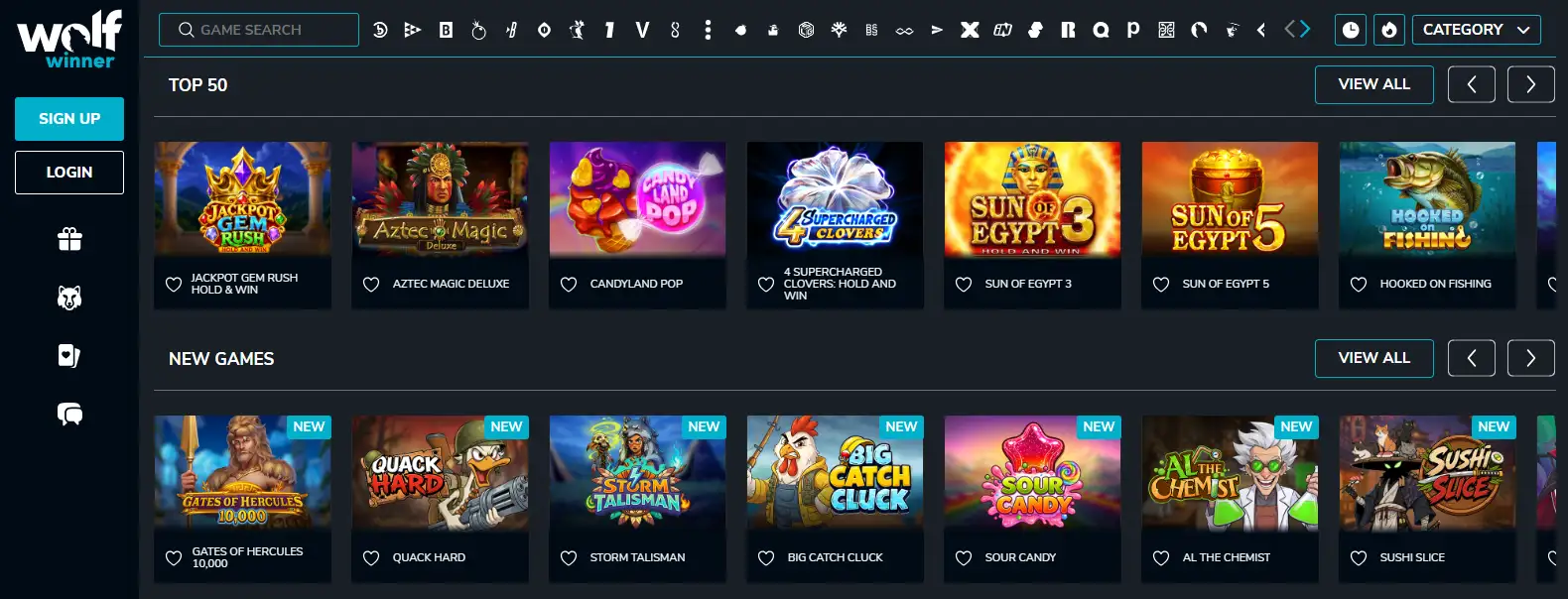
Wolf Winner Licence and Australia Status 2026
 Available in AU
Wolf Winner has been the subject of Australian enforcement action, and the legal position for Australian customers is clear: online casino services are prohibited interactive gambling services under Australian law. ACMA has blocked domains associated with the brand. Outside Australia, a company licence should not be treated as proof that a player-facing Wolf Winner domain is authorised unless the domain itself is tied to the licensed operator. These are separate regulatory questions.
Table of Contents
- Wolf Winner in Australia: the legal position
- ACMA has blocked Wolf Winner domains
- Curaçao licensing depends on a domain-specific operating certificate
- A company licence only helps when the domain relationship is clear
- Build a dispute record around the exact transaction and domain
- Questions about Wolf Winner licensing in Australia
- Wolf Winner’s Australian status is clear, while any offshore licence claim needs a domain-level connection
Wolf Winner in Australia: the legal position
Australia does not license online casino services for provision to people in Australia. The Interactive Gambling Act 2001 treats online casino-style services as prohibited interactive gambling services when they are supplied to Australian customers. Wolf Winner therefore does not hold an Australian online-casino licence, because there is no domestic licensing path for that type of service.
ACMA has specifically treated Wolf Winner as a prohibited interactive gambling service with an Australian customer link. That is more concrete than a general statement about offshore casinos: the regulator has acted against domains associated with this particular brand. For an Australian user, the practical consequence is that access to the casino does not create the same local regulatory relationship that exists with services licensed under an Australian gambling regime.
The distinction matters most when a dispute concerns money, account closure, or terms enforcement. A licence can define who supervises an operator and where a complaint can be escalated. Here, the Australian regulator’s role is enforcement against the prohibited service, not licensing Wolf Winner as an Australian casino operator. Product details such as available payment methods or the games catalogue are separate questions from that legal status.
ACMA has blocked Wolf Winner domains
ACMA lists Wolf Winner among providers found to contravene section 15(2A) of the Interactive Gambling Act. The enforcement record includes wolfwinner.com, the primary historical brand domain, and later wolfwinner.me. The second domain appears in a later blocking action, which shows that enforcement was not limited to a single URL.
Domain blocking is an enforcement measure. It does not convert the blocked service into a licensed Australian product, and a different domain name does not alter the underlying legal category of an online casino service supplied to Australian customers. The relevant point is the service and its Australian customer link, not merely the spelling of the web address.
- wolfwinner.com appears in ACMA action concerning Wolf Winner.
- wolfwinner.me appears in a later ACMA blocking record.
- The Australian status concerns provision of the online casino service to people in Australia.
For a user assessing an unfamiliar Wolf Winner domain, a familiar brand name is not enough to show that the domain has a different regulatory position. The safer comparison is between the exact domain, the operator or licensee named for it, and the regulator that can actually supervise that service.
Curaçao licensing depends on a domain-specific operating certificate
The Curaçao Gaming Authority distinguishes between a licence certificate for an entity and a Certificate of Operation for a specific player-facing domain. A licence certificate confirms that an entity holds a B2C or B2B licence, but it is not domain-specific and does not by itself authorise the operation of a player-facing website.
For a B2C website, the Certificate of Operation is the domain-specific record. The certificate page is required to show the exact domain name, the licensed operator and the operator’s current licence status. A certificate that names a different domain does not establish authority for the website being used.
| Record | Scope | What it establishes |
|---|---|---|
| CGA licence certificate | Entity level | The named entity holds the stated Curaçao licence |
| CGA Certificate of Operation | Domain level | The named player-facing domain operates under the named licensee |
| Wolf Winner | Brand level | Casino Guru currently lists the casino as having no gambling licence |
For Wolf Winner, a Curaçao company name or licence number is therefore insufficient on its own. A Curaçao authorisation claim for a Wolf Winner website would need to lead to a Certificate of Operation that identifies the exact domain and operator. Without that domain-specific connection, an entity licence and the casino website should not be treated as the same regulatory record.
A company licence only helps when the domain relationship is clear
Consumer protection depends on identifying the authority that can hear a complaint about the actual service used. For Australian online casino play, ACMA is not acting as the casino’s licensing supervisor. Its record concerns enforcement of the prohibition on supplying that service to Australian customers.
For a foreign licence to matter in a dispute, the domain, operating legal entity and applicable licence need to connect to one another. Under the Curaçao framework, the domain-specific Certificate of Operation is the record that ties a player-facing website to the licensed operator. A company licence certificate alone does not perform that domain-level function.
- Record the exact casino domain used for the account or transaction.
- Identify the legal entity named in the site’s terms or account correspondence.
- Check that entity against the relevant regulator’s licence register.
- Check whether the regulator provides a domain, trade-name or approved-website record that connects the licence to the casino.
- Keep transaction records, account messages and copies of the terms that applied when the disputed event occurred.
These steps do not change the Australian legal position; they help organise evidence if a dispute has already arisen. Where significant funds or legal rights are involved, obtain advice from a qualified Australian legal professional rather than relying on a casino’s licence badge or an unaffiliated casino listing alone.
When a regulator offers a public register, the strongest domain check is one that can be repeated by another person: exact legal name, licence number, exact web address and any trade name should line up. A footer badge or copied licence number is weaker because it can be reproduced on an unrelated website. The purpose of the register check is to find a regulatory relationship that can be traced independently from the casino interface.
Complaint routes also differ by authority. Some regulators accept player complaints directly, while others require the operator’s internal process or an alternative-dispute body to be used first. The relevant route depends on the licence that actually covers the service. If that connection cannot be made for the domain used, payment records and contractual evidence still matter, but they do not create a regulator relationship by themselves.
Build a dispute record around the exact transaction and domain
A useful dispute file is specific. Start with the exact URL used, the account identifier, transaction references, timestamps, payment method, and the terms that governed withdrawals or account closure. Screenshots and exported account messages can help preserve details that may later change on a live website.
If the issue concerns a card, bank transfer or cryptocurrency payment, keep the payment evidence separate from the licence question. Card or bank records can show that money moved; blockchain transaction IDs can show that a crypto transfer occurred. Neither by itself proves that a casino licence covered the domain. They are different pieces of the same evidence trail.
For Wolf Winner, the Australian record already identifies regulatory action against the brand’s domains. Any separate Curaçao licence claim should be assessed at domain level: the relevant Certificate of Operation should identify the exact Wolf Winner domain, the licensed operator and the current licence status. A company name or general licence reference does not create that domain connection by itself.
Questions about Wolf Winner licensing in Australia
Does Wolf Winner have an Australian online-casino licence?
No. Australia does not license online casino services for provision to Australian customers, and ACMA treated Wolf Winner as a prohibited interactive gambling service with an Australian customer link.
Has ACMA acted against Wolf Winner?
Yes. ACMA enforcement records include wolfwinner.com and later wolfwinner.me in actions involving prohibited interactive gambling services.
Would a Curaçao company licence alone prove that a Wolf Winner domain is authorised?
No. The Curaçao Gaming Authority treats the entity licence certificate and the domain-specific Certificate of Operation as different records. A player-facing domain needs the domain-specific certificate connection to the licensed operator.
What records are useful if a dispute already exists?
Keep the exact domain, account correspondence, transaction references, applicable terms, payment records and any messages about the disputed decision.
Wolf Winner’s Australian status is clear, while any offshore licence claim needs a domain-level connection
The Australian side is direct: online casino services are prohibited for Australian customers, and ACMA has acted against Wolf Winner domains. A Curaçao claim requires a different record: the Curaçao Gaming Authority’s Certificate of Operation for the exact player-facing domain. Casino Guru currently lists Wolf Winner as having no gambling licence, so a contrary licence claim should not be accepted on the strength of a company name or licence number alone.
Read next
Published by the Wolf-winner1.org team.