
Casinos That Accept MiFinity in Australia: What to Check
 Available in AU
Everyday use of cards and mobile wallets in Australia cannot confirm MiFinity support; casino terms and withdrawal conditions need separate checks.
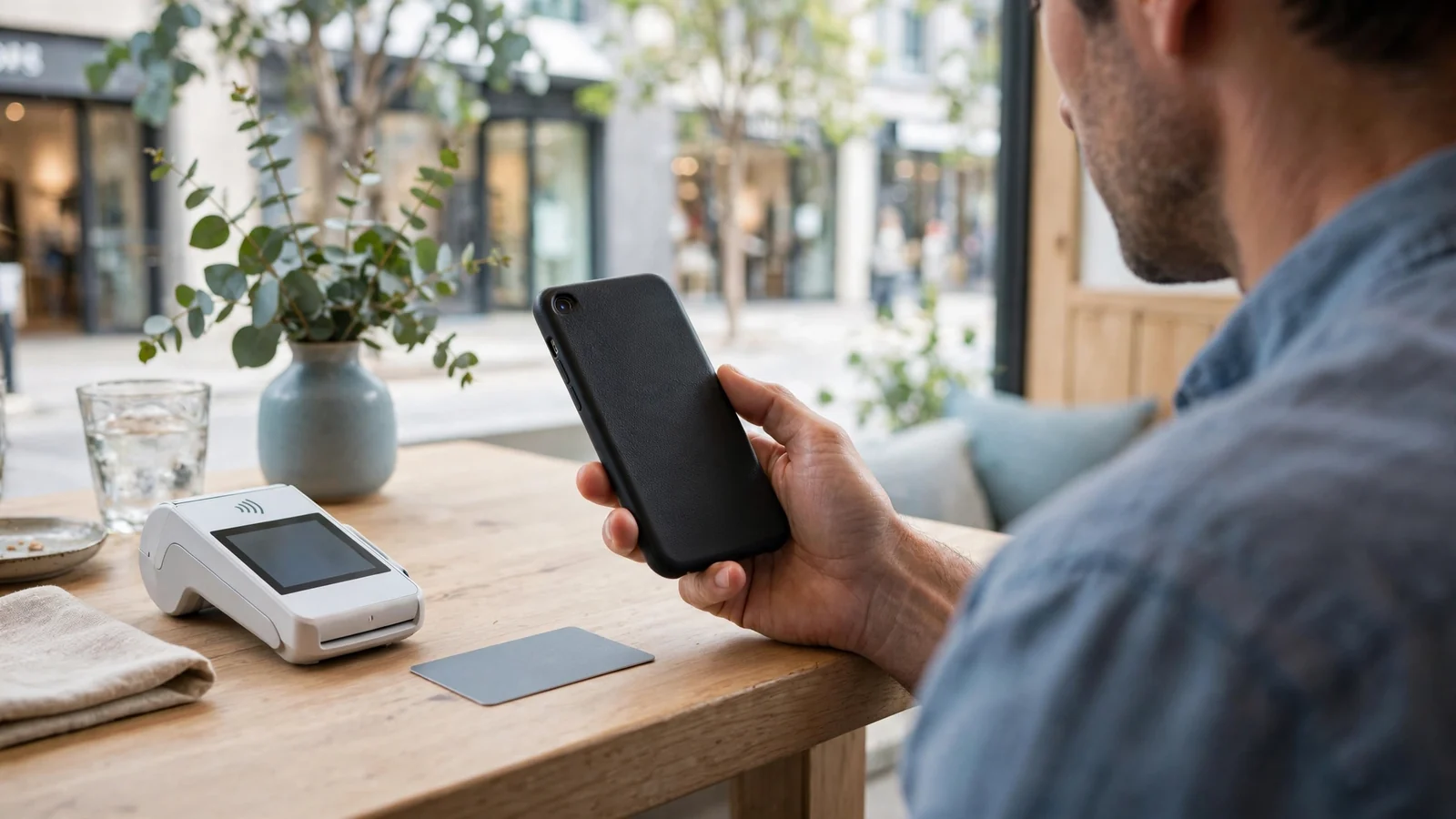
Table of Contents
- What Australian Payment Habits Can—and Cannot—Tell You About Mifinity
- Check the Deposit Terms Before Relying on a Payment Option
- How to Assess a Casino’s Payment Claims Without a Verified Mifinity List
- Withdrawal Timing Is a Separate Question from Deposit Speed
- The Legal Context for Australian Players
- Payment Acceptance Does Not Determine Which Games Are Available
- Australian Payment Preferences Are Not Proof of Casino Support
- Compare Withdrawal Conditions, Not Just Payment Labels
- Compare Payment Methods by Cost and Processing Trade-Off
- Do Not Assume a Bonus Is Linked to a Payment Method
What Australian Payment Habits Can—and Cannot—Tell You About Mifinity
In Australia, paying by tapping a card or phone is an ordinary part of everyday shopping. Contactless credit and debit card payments are accepted almost everywhere, and mobile wallets such as Google Pay and Apple Pay are also widely accepted. Many consumers move between cards, mobile wallets and services connected to bank accounts, including PayPal, according to what suits a particular transaction.
That familiarity gives useful context for understanding how Australians handle payments. It does not establish which payment options an online service supports. A method that is commonplace at shops or across digital services is not automatically available everywhere online, and broad familiarity with wallets says nothing specific about MiFinity acceptance.
The distinction is easy to miss because payment labels can look interchangeable. A card, a mobile wallet and a bank-linked service may all let someone pay digitally, but they are separate methods. Acceptance of one does not imply acceptance of another. Nor does a familiar payment experience in one setting prove that the same method can be used in a different setting.
If you’re looking for casinos that accept MiFinity in Australia in 2026, check the payment options and terms at each casino before depositing. The details below highlight the operator information available for this list.
License: Curacao · Min. deposit: A$20 (POLi) You can note that Lucky Dreams is licensed in Curacao and has a minimum deposit of A$20 via POLi.
License: Curacao Gaming Control Board OGL/2023/176/0095 (Hollycorn N.V.) LuckyVibe’s listed credential is a Curacao Gaming Control Board licence, OGL/2023/176/0095, held by Hollycorn N.V.
License: international iGaming licence – jurisdiction not named in the source · Payout speed: PayID 1-24 hours · Min. deposit: A$30 (PayID from A$10) House of Pokies lists an international iGaming licence, though the jurisdiction is not named in the source. You can also note PayID payouts of 1–24 hours and a minimum deposit of A$30, with PayID deposits from A$10.
License: Curacao Golden Pokies is listed as licensed in Curacao; no further operator details are available here.
License: Curacao eGaming OGL/2024/923/0383 (Antillephone N.V.) · Min. deposit: A$30 WinSpirit Casino is listed under Curacao eGaming licence OGL/2024/923/0383, issued to Antillephone N.V., and has a minimum deposit of A$30.
License: Curacao Gaming Authority (Jumpman Gaming Ltd) DragonSlots Casino is listed as licensed by the Curacao Gaming Authority, with Jumpman Gaming Ltd named in the licence details.
License: Tobique Gaming Commission · Payout speed: crypto ~10-15 minutes, fiat 1-5 days · Min. deposit: A$30 SkyCrown lists a Tobique Gaming Commission licence and a minimum deposit of A$30. Its stated payout times are around 10–15 minutes for crypto and 1–5 days for fiat.
License: Curacao – Antillephone N.V. (Versus Odds B.V.) · Min. deposit: EUR 20 Thor Casino is listed under a Curacao licence associated with Antillephone N.V. and Versus Odds B.V.; its minimum deposit is EUR 20.
License: Curacao eGaming (Roby Games Ltd) Roby Casino is listed as licensed by Curacao eGaming, with Roby Games Ltd named in the licence details.
License: Curacao Gaming Control Board JustCasino is listed as licensed by the Curacao Gaming Control Board; no further operator details are available here.
Everyday use is not merchant-specific support
Imagine comparing two columns: “common in Australia” and “accepted by this particular service.” Contactless cards and mobile wallets belong in the first column as widespread payment options. To place MiFinity in the second, you would need information about the particular service, not a general description of Australian consumer habits.
This matters when you encounter claims about an Australian online casino accepting MiFinity. The phrase “Australian” may describe the audience a page is discussing; it does not, by itself, establish that a payment method is available to people in Australia. Likewise, the presence of a wallet logo or a general list of payment types should not be treated as proof of a specific option unless the information clearly identifies it.
The practical point is narrow: widespread use of digital payments describes the local environment, not an individual operator’s payment setup. Familiarity is not confirmation.
Why the payment method matters
Consumers often switch between cards, mobile wallets and bank-linked services. That flexibility can make digital payments feel like one connected system. In practice, the names still matter. Google Pay and Apple Pay are mobile wallets; PayPal is a service linked to banks; MiFinity is a separate payment method. A person’s comfort with one category cannot be used to infer that another category is supported.
The same caution applies to the word “wallet.” It can refer to different products with different arrangements. Seeing that people in Australia use mobile wallets widely does not establish that MiFinity is accepted, that a particular site offers it, or that it is available for any particular transaction. Those are distinct claims.


For a reader comparing payment information, keep the criteria separate: general popularity, availability at a particular service, and the conditions attached to an available option are not the same measure. Popularity describes how familiar a method may be to consumers. Availability concerns whether a named service supports it. Conditions concern how that service handles it. Combining all three into a single assumption produces a neat answer, but not a reliable one.
Read local context at the right scale
Australian payment habits can help explain why people expect to find several digital options. A consumer who regularly pays by card, taps a phone or uses a bank-linked service may reasonably recognise the broad categories. That background can make payment terminology easier to follow; it cannot answer a site-specific question about MiFinity.
A useful comparison is to treat national habits as a map of the wider landscape, not a directory of individual services. The map tells you that contactless payments and mobile wallets are common across Australia. It does not mark every service that accepts a particular method. Moving from the general picture to a claim about one payment option requires evidence at the same level of detail as the claim.
So if you are trying to establish whether a particular Australian-facing casino accepts MiFinity, neither contactless card use nor the popularity of Google Pay, Apple Pay or PayPal settles the question. These habits show that Australians are accustomed to switching between payment types. They do not show that MiFinity is among the options offered by any given service.
- Treat national payment habits as a map of the wider landscape
- Require evidence at the same level of detail as the claim
- Keep general popularity, availability, and conditions separate
- Use broad familiarity with wallets to infer MiFinity acceptance
- Treat a general list of payment types as proof of a specific option
- Combine popularity and availability into a single assumption
Keep the comparison precise: widespread local use is evidence of consumer familiarity, not evidence of specific acceptance. A familiar market, a familiar payment label and an available option are three different things.
Check the Deposit Terms Before Relying on a Payment Option
A payment method’s popularity outside gambling does not tell you whether a particular cashier accepts it. Deposit options are set by the operator and can vary between sites; even a method shown in general payment information may not appear when you open an account or reach the cashier. Treat the cashier’s current options and terms as the relevant information, not an assumption based on what Australians commonly use elsewhere.
That distinction matters when you are looking for a casino deposit via MiFinity. A site’s general payment page, an old review or a familiar payment brand is not enough to establish that MiFinity is available for your account. Before relying on it, look for the method in the cashier and read the conditions attached to it. If it is not listed there, do not assume that a support article or a third-party description means you can use it to fund an account.
Read the cashier as a set of conditions
Check the deposit screen for more than a payment logo. Confirm whether the method is currently selectable, which currency the cashier uses, and whether the operator displays a minimum or maximum deposit. Read any notes about account verification, processing, fees or restrictions before submitting a transaction. Those details belong to the operator’s current terms; they cannot be inferred from the payment method’s name.


If the site presents different options depending on your location, account status or currency, the option visible to you is more relevant than a generic list. A payment page may describe methods that are not enabled for every customer. Likewise, seeing MiFinity mentioned somewhere on a site does not, by itself, confirm that a MiFinity deposit can be made from your account.
The same care applies to a search for a $10 MiFinity deposit. A figure in a search result or an old review does not establish the current minimum at a particular cashier. Check the amount shown by the operator before making a decision. If no minimum is displayed, ask the operator for the applicable condition rather than treating an unconfirmed figure as a promise.
A useful comparison is not simply “MiFinity listed” versus “MiFinity absent.” Record what the cashier actually says: whether the option appears, the currency accepted, the stated deposit range, and any conditions shown before payment. If a detail is unclear, leave it unresolved until the operator confirms it. A tidy comparison is more useful than a confident guess.
What an Amex example can—and cannot—show
A specialist review has reported that American Express deposits are available at some Australian online casinos. That is a limited, time-sensitive statement, not confirmation that every operator accepts Amex or that the option will be available to every customer. It also says nothing about MiFinity acceptance. Payment methods should be checked individually; one method’s presence cannot stand in for another’s.
The documented Amex deposit process illustrates the kind of steps a cashier may display, but it is specific to that card. The player selects Amex in the cashier, enters the card details and the deposit amount in Australian dollars, then submits the payment. Do not transfer those instructions to MiFinity. A different payment service can have a different flow, currency setting or set of conditions.
Amex Deposit Process
The player selects Amex in the cashier.
The player enters the card details and the deposit amount in Australian dollars.
The player submits the payment to complete the transaction.
Nor does that Amex process establish a MiFinity minimum. The amount entered for a card transaction is not evidence of a minimum for another method, and an operator’s rules can differ between payment options. If you need a particular amount to be accepted, rely on the limit stated beside MiFinity in the cashier, not on an example involving another payment method.
Make the decision on confirmed details
For a casino with MiFinity deposits, the practical test is whether the cashier currently offers MiFinity to you and states the conditions clearly. Check those details before deciding to register or attempting a deposit. If the site’s general information conflicts with the cashier, ask the operator to clarify the terms that apply to your account. Until they do, treat the cashier as the unresolved point—not as evidence that a deposit will work.
This approach avoids two common errors: assuming that a payment option is available because it is familiar, and assuming that an amount or procedure for one method also applies to another. The Amex example provides a concrete card workflow; it does not provide MiFinity instructions, availability or a minimum. Keep each method’s conditions separate and make the comparison on the terms actually displayed. A label is not a deposit.
How to Assess a Casino’s Payment Claims Without a Verified Mifinity List
A payment logo is a clue, not a complete set of terms. If you are comparing claims about MiFinity, separate three questions: whether the method is named, whether the claim applies to customers in Australia, and whether the stated function is depositing, withdrawing or both. A page that answers only one of these does not settle the others.


This distinction matters because payment acceptance is not uniform. A specialist review has reported that some online casinos do not accept American Express, while another specialist review suggests Visa may be accepted more broadly than American Express at Australian online casinos. Those observations describe variation between payment options; they do not establish which operators accept MiFinity. Nor does a comparison between card brands tell you anything definite about a separate payment service.
Read the claim at the right level
Treat broad wording such as “multiple payment methods available” as general description, not proof that a particular method is supported. A payment page that names MiFinity is more specific, but you still need to see what the statement actually covers. It might refer to deposits only, or to a payment option available in some circumstances rather than to every customer.
A useful comparison is to record each claim against the same criteria:
| Criterion | What the claim needs to clarify |
|---|---|
| Method | Does it name MiFinity specifically? |
| Customer location | Does it apply to customers in Australia? |
| Transaction type | Does it cover deposits, withdrawals or both? |
| Currency | Does it explain whether AUD is supported? |
| Conditions | Does it identify eligibility or account requirements? |
| Currency of information | Is the page current, or could it describe an earlier arrangement? |
This is not a ranking table. It is a way to prevent one broad statement from being mistaken for a full answer. If a page omits a criterion, mark it as unclear rather than filling the gap with an assumption.
Give direct statements more weight
There is a difference between an operator’s current payment information and a third-party description of what may be available. A review can help you identify a claim, but it may not reflect a later change. The operator’s own published terms and payment information are more directly relevant to what it says it offers. Even then, wording matters: a method displayed somewhere on a site is not automatically available for every transaction or every customer.
Look for consistency across the relevant pages. If a payment page names MiFinity but the terms do not explain its role, the claim is incomplete. If one page describes deposits and another appears to cover withdrawals, do not combine them unless the wording clearly supports that reading. A mismatch is a reason to seek clarification, not a reason to choose the more favourable interpretation.
Small wording differences carry real weight: “Accepts” may leave the transaction type unstated, while “Deposit method” or “Withdrawal method” are narrower claims.
Pay attention to the exact verb. “Accepts” can sound comprehensive while leaving the transaction type unstated. “Deposit method” is narrower. “Withdrawal method” is a separate claim. Likewise, “available” does not by itself explain whether the option is available to Australian customers. Small wording differences carry real weight.
Define “best” before comparing
There is no useful single winner unless you first choose a criterion. If your priority is confirmed availability, compare the clarity and scope of the stated acceptance. If you care about flexibility, compare whether the information distinguishes deposits from withdrawals. If you care about certainty, give more weight to current, specific terms than to a broad third-party summary.
That approach also avoids a common leap: a payment method being supported does not, by itself, show that it is the best choice for you. The claim might be narrow, conditional or silent on a detail that matters to your decision. A carefully worded comparison should therefore say which criterion it is using, rather than treating “best” as a measurable feature on its own.
When a MiFinity claim cannot be matched to a clear transaction type and customer scope, leave it unresolved. Do not infer support from card acceptance, a general payment logo, or a comparison with American Express. Similar-looking claims are not equivalent evidence. Separate the evidence from the assumption.

Withdrawal Timing Is a Separate Question from Deposit Speed
A payment can reach an account quickly without making withdrawals equally quick. A deposit and a payout move in opposite directions, involve different checks and may follow different processing steps. Treating “instant” as a description of both is a mistake: it may describe only the money going in.
Amex illustrates the distinction. Casino deposits made with Amex are processed instantly. By contrast, a specialist review reports that an Amex casino withdrawal can take up to five days to clear. That figure is a report from a particular type of source, not a universal timetable for every operator or transaction. Still, it shows why a fast deposit is not evidence of a fast payout.
What “instant” needs to describe
When a payment option is labelled instant, identify the stage it refers to. It might mean that a deposit is credited promptly, not that a withdrawal is approved and received at the same speed. A payout can involve separate review and release steps, so the words attached to a deposit do not settle the withdrawal question.
A claim about instant deposits does not establish an instant withdrawal, as payouts often involve separate review and release steps.
For an Australian looking at claims about MiFinity, the useful distinction is the same. A claim about instant deposits would not, by itself, establish an instant MiFinity withdrawal. Nor does the word “instant” tell you when funds become available in your bank account or payment account. Those are separate points to pin down in the stated withdrawal terms.
The key comparison is not simply “fast” against “slow”. It is deposit crediting time against withdrawal processing time, and then processing time against the time it takes for the funds to arrive. If a payment page gives one timing but says nothing about the other stages, you do not have a complete payout estimate.
Read the withdrawal wording literally
Look for wording that refers specifically to withdrawals, rather than general payment speed. Check whether the stated period concerns the operator’s processing or the transfer after release. If those stages are not distinguished, the timing claim may be less informative than it sounds.
For MiFinity, do not assume that Amex timings transfer across. They are different payment methods, and the Amex example only demonstrates the deposit-versus-withdrawal distinction. It does not establish how quickly a MiFinity withdrawal is processed or received. A precise answer needs a MiFinity-specific withdrawal term; without one, “instant” is not a reliable description of the whole journey.
This matters particularly when a site uses broad phrases such as “instant payments”. Read the surrounding explanation to see whether it refers to deposits, withdrawals, or both. A prompt deposit can coexist with a slower payout process. Convenient wording, incomplete answer.

If a withdrawal claim gives no method-specific timing, compare only what it actually says. Do not turn a general promise into a guaranteed arrival time, and do not use the deposit speed as a substitute. The relevant evidence is the withdrawal condition for the payment method in question, not the headline attached to the cashier.
The practical test is simple: keep the two clocks separate. One starts when you submit a deposit; the other concerns the handling and arrival of a withdrawal. Amex provides a concrete contrast between those stages, while it cannot supply a timetable for MiFinity. An instant deposit may be instant. That is all it proves.
The Legal Context for Australian Players
The legal distinction is between the person using a service and the operator providing it. Under the Interactive Gambling Act 2001, offering real-money online casino services to people in Australia is prohibited. The rule covers online casino games, rather than making a payment method the deciding factor. A casino’s mention of MiFinity, or any other payment option, does not change the legal status of the service.
The Act does not explicitly make an Australian player’s use of an offshore casino a criminal offence. That is not the same as approval or protection. Offshore operators are not thereby authorised to offer online casino services in Australia, and Australian consumer law does not protect players using offshore casinos. If a dispute arises, you should not assume that Australian consumer protections or local complaint pathways will apply.
The Australian Communications and Media Authority (ACMA) oversees enforcement of the Act. Its role is directed at the law’s restrictions on prohibited services, not at confirming which casino accepts a particular payment method. Offshore casino services are subject to active blocking and enforcement, so claims that a site is available to Australians should not be read as proof that its operation is lawful.
Legal Status
Under the Interactive Gambling Act 2001, offering real-money online casino services to people in Australia is prohibited, and Australian consumer law does not protect players using offshore casinos.
What this means when assessing payment claims
A page describing a casino as a site that accepts MiFinity answers, at most, a payment-acceptance question. It does not establish that the operator may lawfully provide online casino games to people in Australia, nor does it create consumer protection. Those are separate criteria, and the legal position takes priority over a payment label.
Keep the comparison in the right order: legality and the risks of dealing with an offshore service come before convenience or payment choice. An operator’s marketing language, cashier display, or claim of overseas authorisation cannot override the Australian prohibition. Nor does the fact that a player is not explicitly criminalised mean that an offshore service is safe, endorsed, or covered by Australian law.
The key boundary is straightforward: the Act prohibits operators from offering these services to people in Australia, while it does not explicitly criminalise players for using offshore sites. ACMA enforces the legislation. For you, the practical consequence is that a payment claim should never be mistaken for a legal assurance. Different questions.
Payment Acceptance Does Not Determine Which Games Are Available
Payment processing and a game catalogue are separate parts of an online service. A payment option indicates only that a particular payment route may be offered; it does not tell you which titles or categories are available, or whether they are accessible to a particular customer. The same distinction applies to MiFinity: a reference to it as a payment method would not, by itself, establish anything about the games associated with that site.
That matters because searches for games connected with MiFinity can blur two different questions. One is whether a cashier lists MiFinity as a payment option. The other is what content a site provides. You cannot reliably answer the second by looking at the first. Payment logos, cashier labels and account instructions are not a catalogue.
Account checks are another separate step. Online casinos commonly ask customers to complete Know Your Customer checks before processing financial transactions. Those checks concern identity and account verification; they do not show which games are offered, nor do they make a payment method evidence of access to particular content. Keep the criteria in separate columns: payment availability, identity checks and content access. None substitutes for another.
If a site’s terms discuss MiFinity, read the wording narrowly. A statement about deposits or withdrawals concerns payment handling unless it expressly says more. Likewise, a catalogue or game description does not confirm that MiFinity can be used to fund an account. Treating one as proof of the other turns a label into a claim it cannot support. Neat, but wrong.
For a clear comparison, look for explicit information about each subject rather than inferring one from another. The cashier is relevant to payment options; account terms explain verification requirements; content information describes what a service says it provides. If those details are vague or inconsistent, the sensible conclusion is limited: the payment label does not settle the content question.
Account Verification
Online casinos commonly require Know Your Customer (KYC) checks before processing financial transactions. These checks focus on identity and account verification and are separate from payment availability or game access.
This distinction is especially important when a page groups payment terms and game descriptions together. Their proximity on a screen does not create a connection. Nor does the phrase “games with MiFinity” necessarily describe a special set of titles; it may simply combine a payment question with a content question. Read each claim according to what it actually addresses, and do not assume that a payment method determines a catalogue.
Australian Payment Preferences Are Not Proof of Casino Support
Australian consumers are used to moving between cards, mobile wallets and services linked to bank accounts, such as PayPal. That flexibility is part of the wider payment landscape. It does not establish that a particular service is available for a particular transaction, or that an online casino accepts MiFinity.
The distinction is easy to miss. A payment option may feel familiar because you use it elsewhere, but familiarity is not the same as acceptance by a specific business. Cards, wallets and bank-linked services are separate payment routes, each with its own arrangements. MiFinity should be treated as its own option, not assumed to work simply because Australians commonly switch between other ways to pay.
A useful comparison is to separate consumer habit from operator support. The first describes what people are comfortable using across everyday payments. The second concerns an individual operator’s current arrangements. One does not prove the other. Nor does seeing a payment brand mentioned in general information show that it can be used for every purpose or by every customer.
That is why broad statements about Australian payment preferences cannot answer whether a specific casino supports MiFinity. They provide context, not confirmation. If payment details are relevant to a decision, rely on the operator’s own current terms rather than extrapolating from how people pay elsewhere. Familiarity is a weak test.

There is also a separate issue beyond payment choice: Australian consumer law does not protect players who use offshore casinos. A payment method’s presence or recognition should not be read as reassurance about the service behind it, or as evidence that using the service is legally protected.
So, when comparing payment information, keep the question narrow: does the individual service expressly identify MiFinity as an available option for the transaction you have in mind? General comfort with cards, mobile wallets or bank-linked services cannot answer that. Local habits describe the market; they do not certify a casino’s payment arrangements.
Compare Withdrawal Conditions, Not Just Payment Labels
A payment option shown for deposits does not automatically work for withdrawals. Treat the two directions as separate conditions: a cashier may accept a method when you add funds while its withdrawal rules require another route, impose different limits, or exclude that method altogether. A payment logo is not a complete set of terms.
A specialist review has reported that some online casinos do not permit withdrawals to Amex. That is a report about Amex, not a rule that applies to every operator or evidence of how MiFinity withdrawals work. The practical check is the operator’s current withdrawal policy and the options actually displayed in the account cashier. If those details do not clearly cover withdrawals to MiFinity, do not assume that a deposit option confirms payout support.
Limits need the same separate check. A specialist review notes that individual online casinos set their own Amex deposit and withdrawal limits, which can differ. That makes an operator’s stated limit more useful than a general description of the payment brand. Check whether a limit applies per transaction, to deposits, to withdrawals, or to both; do not treat one figure as covering every direction.
Withdrawal Considerations
- Treat deposit and withdrawal methods as separate conditions
- Verify the operator’s current withdrawal policy in the cashier
- Check if limits apply per transaction, to deposits, or to withdrawals
- Remember that payment details do not provide legal protection for offshore services
For a comparison, record the withdrawal method, any stated limit, and any conditions attached to using it. Then compare like with like. A method can be convenient for funding but unsuitable for receiving money if withdrawals are not supported. MiFinity’s presence in a payment list alone does not settle that question.
Keep the legal setting in view as well: Australian consumer law does not protect players using offshore casinos. Payment details cannot change that exposure. Read the terms as information, not as a recommendation to use an offshore service. Clear conditions matter. Guesswork does not.
Compare Payment Methods by Cost and Processing Trade-Off
A payment method is not automatically better because it sounds faster or more familiar. Compare the costs and processing conditions that apply to the transaction you are considering, rather than treating one option as the default winner.
Bank transfers illustrate the trade-off. A specialist review describes them as potentially involving longer waits and higher fees. That is a reason to check the terms shown for a particular transaction, not a guarantee that every transfer will be slower or more expensive. The comparison matters most when timing or charges would affect your decision.
For MiFinity, avoid assuming a fee or processing speed from the payment label alone. The name of a method does not tell you what a particular service will charge, how it will process a transaction, or whether the same conditions apply in both directions. Those details need to be stated in the applicable terms. If they are not clear, a precise comparison is not possible.
A useful comparison table can stay simple:
| Criterion | What to compare |
|---|---|
| Cost | Any stated transaction charge or currency-conversion cost |
| Processing | The stated time for the relevant transaction |
| Conditions | Any restrictions attached to that method |
| Clarity | Whether the terms explain the costs and timing plainly |
Do not rank methods by a single measure. A lower stated fee may matter more to you than speed; another person may give timing greater weight. The winner depends on your criterion, and unclear terms should count against a method’s transparency—not be filled in with assumptions.
This approach is more useful than asking only whether a casino can pay with MiFinity. It keeps the focus on what the payment actually costs and how its processing is described, without treating an unconfirmed rate or timeframe as a fact. No shortcut here.
Do Not Assume a Bonus Is Linked to a Payment Method
A payment option and a promotion are separate terms. Even if a cashier lists MiFinity, that alone does not show that a casino offers a MiFinity bonus, or that any promotion is available to someone depositing with it. The same distinction applies in reverse: a bonus description does not prove that MiFinity can be used to claim it.

Treat claims about a casino bonus linked to MiFinity as unconfirmed until the relevant terms explicitly connect the payment method and the offer. Check whether the promotion names eligible deposit methods, excludes particular methods, or sets other conditions for participation. Read the full terms rather than relying on a banner or a short label; the detail that determines eligibility belongs in the offer rules.
A useful comparison table would need more than an offer title. It would need the promotion’s eligibility wording, the payment methods covered, and any conditions attached to claiming it. Without those details, ranking MiFinity casino bonuses would imply a level of confirmation that the label “bonus” cannot provide. No responsible offer list follows from payment acceptance alone.
Keep the decision criterion clear: if you are comparing promotions, compare their written eligibility terms; if you are checking a payment route, verify that separately in the cashier. One does not establish the other. Treating them as interchangeable is a neat shortcut—and a poor basis for a deposit.
How do you check if casino sites accept Amex deposits?
Check the casino’s cashier for American Express as a currently selectable deposit option, then review its terms. Some casinos do not accept Amex, and an Amex payment may also be blocked by your bank or card issuer.
What are the deposit and withdrawal limits at the best Amex casinos?
Limits are set by each casino and can vary, so check the cashier and payment terms at the casino you plan to use. Amex limits are usually higher than those for Visa or Mastercard.
Does American Express work for online casinos?
Yes, some Australian online casinos accept Amex deposits, but others do not. Check the casino’s cashier, and remember that a bank or Amex may block a gambling transaction.
What are the fees involved with American Express payments?
Amex deposits are typically free, but a casino may add a 1.5% surcharge, and Amex cards can incur a 3% currency conversion fee. Withdrawal fees may also apply, depending on the casino.
Are there fees for using Amex at online casinos?
Amex deposits typically have no fee, but the casino may charge a 1.5% surcharge or a withdrawal fee. A 3% currency conversion fee can also apply to Amex cards.
Are there any fees associated with using American Express at online casinos?
Deposits are typically free, though a casino may apply a 1.5% surcharge. Withdrawals may carry a fee, and Amex cards can incur a 3% currency conversion fee.
Created by the ”Wolf-winner1.org” editorial team.